
Key Takeaways
- Automated chemical etching lines with closed‑loop etchant control are essential for maintaining quality across high‑volume orders.
- Tolerance repeatability of ±0.025 mm can be achieved with proper process control and registration systems.
- Reel‑to‑reel etching is cost‑effective for thin, flexible metal components in large quantities.
- Selecting the right machine upfront reduces per‑part cost and lead time variability in bulk production.
How bulk ordering of etched parts works with this supplier
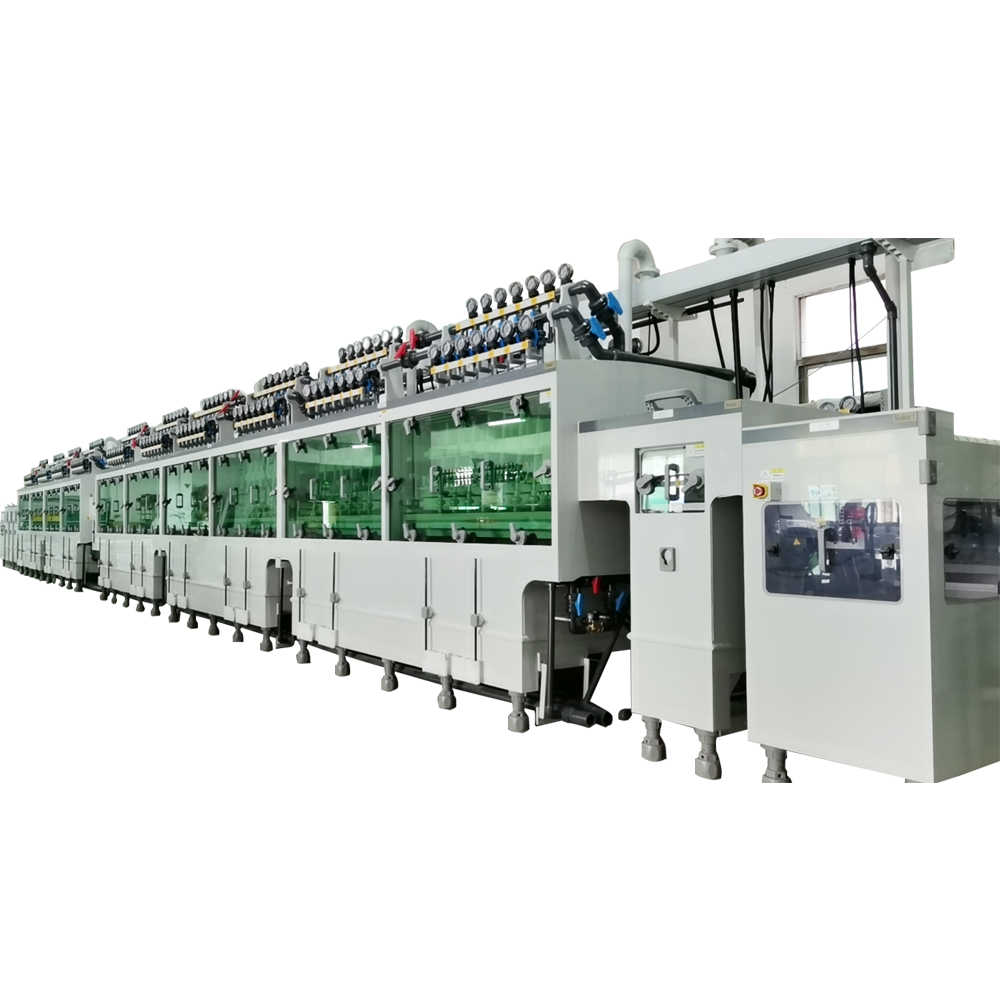
When your project demands thousands or millions of precision-etched metal components, the bulk ordering framework becomes as critical as the part design itself. Our photochemical etching (PCM) process is built for scalability, allowing seamless transition from prototype to high-volume production without retooling. Unlike traditional machining, there are no hard tooling costs, so volume pricing benefits kick in early. You submit part drawings in DXF or DWG format, we generate phototools, and production ramps up on an automated chemical etching line that maintains consistent feature resolution across every sheet or reel. This article walks you through the operational parameters that drive bulk procurement decisions, so you can plan schedules, budgets, and inventory with confidence.
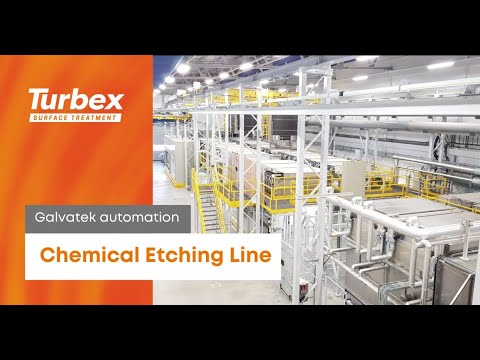
MOQ and volume tiers: sheet vs. reel-to-reel production
Our manufacturing accommodates both sheet-based and continuous reel-to-reel processing, each with distinct volume characteristics. Sheet etching, typically serving moderate quantities, starts at one sheet per design—ideal for low-volume precision parts or initial pilot runs. As demand grows, you gain price breaks at standard sheet counts (e.g., 10, 50, 100 sheets), with per-part cost decreasing due to amortized setup. For high-volume, continuous lengths of thin-gauge metals, reel-to-reel processing is the most economical route. The chemical etching machine runs coils up to several hundred kilograms, producing parts in the tens of thousands per run. MOQ for reel-to-reel depends on coil width and material; as a general rule, a minimum run length is required to make tension control and chemical exposure uniform, which our engineers can clarify for your specific alloy and part geometry. In all cases, multi-part nesting on a single sheet or reel reduces waste and unit cost, a service we include in quotation preparation.
Lead times and production scheduling
Timelines are structured around three phases. First, digital phototool setup takes 2–3 working days after design approval. Next, first article samples—processed on the production-intended automated chemical etching line to match exact process conditions—are ready within 3–5 days for domestic destinations; expedited options exist. Production ramp then follows a standard cadence: once samples are signed off, typical volume throughput ranges from 1–3 weeks depending on order size and material availability. For recurring production, we hold phototools in climate-controlled storage, so repeat orders skip the tooling phase and go straight to scheduling, often cutting total lead time by 30–50%. We also offer priority scheduling for blanket orders, reserving capacity against your forecast.
Packaging, tabbing/singulation, and shipping options
Parts leave our facility ready for your assembly line. During etching, we leave micro-tabs connecting components to the sheet frame to prevent loss. Upon request, we perform singulation—removing tabs and counting parts into bulk packaging, custom trays, or tape-and-reel for automated pick-and-place. Standard export packaging includes moisture-barrier bags with desiccant, then double-walled cartons. For fragile or sub-millimeter parts, vacuum-formed cushions or partitioned boxes are used. Shipping mode is chosen based on urgency and volume: air freight for prototypes and urgent fills, sea freight for high-volume containers, or courier consolidation for regular replenishment. Our logistics team optimizes route and carrier based on your Incoterms selection.
Incoterms, payment terms, and documentation
We operate on globally recognized Incoterms—commonly FOB port of origin, CIF destination port, or EXW factory—giving you control over freight risk and cost. Payment terms are typically T/T with deposit against proforma invoice and balance before shipment; for established relationships, net-30 options or irrevocable L/Cs at sight can be negotiated. Each shipment includes a full documentation package: commercial invoice, packing list, certificate of conformity, material test reports (as agreed), and airway bill or bill of lading. For first-time importer assistance, our export department can guide you through HS codes and customs requirements relevant to etched metal parts.
Reordering, forecasting, and long-term supply
To minimize inventory shocks, we offer kanban-style call-off agreements. Under a blanket order, you reserve a block of capacity and release shipments against it with as little as one week’s notice. We maintain buffer stock of your specified metal for faster replenishment. Additionally, 12-month rolling forecasts help us secure raw material and line time, locking lead times even during peak demand. Design changes are managed through revision-controlled phototools, ensuring that all repeat orders match the latest approved configuration. This approach transforms a transactional buy into a strategic supply partnership, reducing total acquisition cost.
Request a bulk quotation
To start a bulk order evaluation, send your part drawing (.dxf/.dwg) with material, thickness, quantity per year, and target cost goals. Our application engineers will return a feasibility review and a detailed volume pricing proposal, typically within 48 hours. Contact us to discuss your next project.
How to Select a Chemical Etching Machine for Bulk Production of Precision Parts
The right chemical etching machine for bulk orders must deliver consistent throughput, edge quality, and dimensional accuracy across thousands of cycles. An automated chemical etching line with conveyorized spray chambers is typically required to meet the productivity and repeatability demands of high-volume precision metal components.
Key Selection Parameters for High-Volume Etching
- Sheet or roll stock capacity: Machines are designed for either rigid sheets (commonly up to 600 mm × 600 mm) or continuous reel-to-reel processing of flexible metals.
- Etchant management: Closed-loop regeneration systems sustain stable etch rates over prolonged production, directly impacting part-to-part uniformity.
- Temperature and pressure control: Microprocessor-controlled parameters maintain the required etch window, often achieving tolerances within ±10 % of material thickness.
- Automation level: In-line modules that handle developing, etching, stripping, and rinsing cut labor cost and minimize handling damage.
Material Compatibility and Etchant Choice
Production-grade equipment processes metals ranging from stainless steel and copper to alloys like molybdenum and titanium. The etchant—most commonly ferric chloride or cupric chloride—must be matched to the substrate; some lines incorporate multiple chemistries for mixed-material orders. Modular rinse stages prevent cross-contamination when switching between dissimilar metals.
Tolerance and Repeatability in Bulk Runs
A well-engineered wet etching line can hold dimensional tolerances as tight as ±0.025 mm on thin foils. For bulk orders, the machine’s ability to maintain front-to-back registration and edge profile is critical. Optical alignment or pin-and-hole registration systems help achieve consistent results in applications like encoder discs, spring contacts, and EMI shields.
Scalability with Automated Chemical Etching Lines
High-volume demands call for a fully integrated Wet Chemical Etching Processing Equipment line. These systems combine developing, etching, and film stripping in a single, programmable sequence. Quick-change spray nozzles and recipe control allow rapid part changeover, making them suitable for high-mix production environments.
| Aspect | Key Considerations |
|---|---|
| MOQ & Volume Tiers | Sheet-based or reel-to-reel; economies start at mid-volume production runs. |
| Lead Times & Scheduling | Phototool setup, sampling, and ramp-up; blanket orders shorten repeat lead times. |
| Packaging & Shipping | Tabbing, singulation, and export-compliant packing; multiple Incoterms available. |
| Long‑Term Supply | Kanban, 12‑month forecasts, and buffer stock ensure capacity during peak demand. |
| Machine Throughput | Conveyor speed, etch chamber length, and automation level define output per shift. |
| Precision & Tolerances | Registration systems and temperature control determine achievable accuracy. |
| Material Range | Machine must handle the required metal thickness and alloy type with appropriate etchants. |
To discuss a bulk evaluation or schedule a process demonstration, contact our engineering team with your part drawing and volume projections. We provide feasibility reviews and detailed equipment proposals tailored to your production targets.
Frequently Asked Questions
What is the typical lead time for a chemical etching machine setup?
Lead time for a production‑grade chemical etching machine varies based on customization and line complexity. Standard configurations can be deployed within a few months, while fully automated lines may require longer integration and testing periods. Early engagement with the supplier helps align delivery with your production schedule.
How does material thickness affect etching machine selection?
Thinner foils (below 0.1 mm) often require reel‑to‑reel handling to prevent damage, whereas thicker sheets (up to 1.5 mm or more) can be processed on conveyorized spray etchers. The machine’s conveyance system and spray pressure must be matched to the material’s stiffness and weight to ensure uniform etching without warping.
Can one machine handle multiple metals?
Yes, many production machines are designed for multi‑metal capability. They feature separate storage tanks and pumps for different etchants, along with thorough rinse stages to prevent cross‑contamination. Quick‑change nozzle systems allow switching between ferric chloride, cupric chloride, or other chemistries with minimal downtime.
What are the maintenance requirements for a production etching line?
Routine maintenance includes etchant filtration, nozzle inspection, and monitoring of temperature and pressure sensors. Regeneration systems require periodic chemical replenishment. A preventive maintenance schedule minimizes unplanned downtime and ensures consistent etch quality over high‑volume runs.
How do I calculate the ROI of an automated etching machine?
ROI is determined by comparing labor savings, reduced scrap, faster cycle times, and improved yield against the machine investment. Additionally, in‑house automated etching can eliminate outsourcing costs and shorten lead times. Suppliers often provide ROI models based on your part volumes and mix.
Frequently Asked Questions
What is the typical lead time and minimum order for Bulk Ordering Chemically Etched Parts: Requirements, MOQs, and Logistics?
Because etching needs no hard tooling, Bulk Ordering Chemically Etched Parts: Requirements, MOQs, and Logistics can be prototyped quickly and scaled to volume. Share your drawing and quantity and we will advise lead time.
Which industries use Bulk Ordering Chemically Etched Parts: Requirements, MOQs, and Logistics?
Bulk Ordering Chemically Etched Parts: Requirements, MOQs, and Logistics is used across electronics, medical, automotive, aerospace and industrial filtration — anywhere precise, burr-free thin-metal parts are required.
What is Bulk Ordering Chemically Etched Parts: Requirements, MOQs, and Logistics and how is it made?
Bulk Ordering Chemically Etched Parts: Requirements, MOQs, and Logistics is produced by photochemical etching — a process that uses a patterned resist and etchant to remove metal precisely, with no mechanical stress or burrs.