
Optical Encoder Accuracy: The Science Behind Chemically Milled Gratings
Target Audience: R&D Engineers & Designers
Service Link: Chemical milling Service
Introduction
In high-performance motion control and measurement systems, optical encoder accuracy directly dictates machine repeatability, throughput, and product quality. When you need sub‑micron precision at high rotational speeds, chemically milled gratings—produced through a specialized Chemical milling Service—offer unparalleled edge definition, thermal stability, and signal integrity.
Physics of Light Interruption
An optical encoder interprets motion by shining a light through a grating and counting interruptions. The groove geometry must be controlled to within ± 5 μm to preserve code resolution and signal clarity.
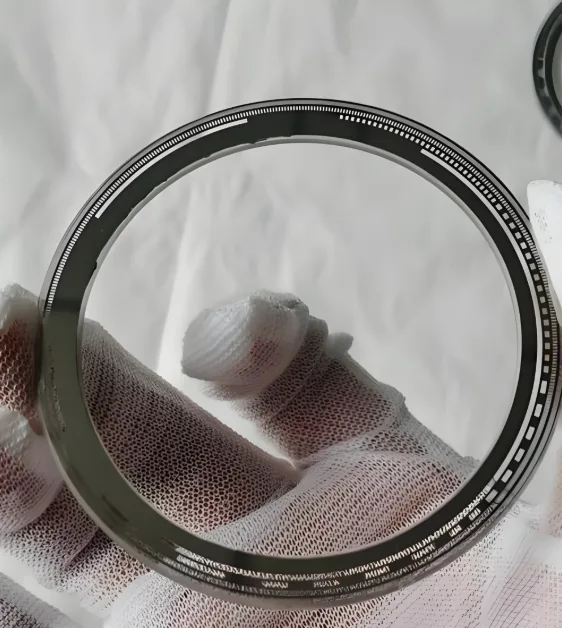
- Groove depth affects light intensity contrast; too shallow yields low modulation, too deep introduces reflections.
- Channel width tolerance (< 2 μm variation) ensures consistent duty cycle and minimal jitter.
- Angular alignment errors as small as 0.1° can cause measurable phase shifts at high RPMs.
“Encoder accuracy is only as good as the grating quality. Microscopic deviations in groove geometry cause significant errors.” — Renishaw Technical Bulletin, 2023
Edge Definition: Milling vs. Alternatives
| Process | Edge Sharpness | Angular Error | Thermal Impact | Use Case |
|---|---|---|---|---|
| Laser Ablation | Good (recast edges) | 0.2°–0.5° | Heat‑affected zones | Rapid prototyping |
| Mechanical Micromachining | Excellent (tool stress) | < 0.1° | Tool‑induced stress | Low‑volume precision |
| Chemical Milling | Ultra‑sharp, burr‑free | < 0.1° | No thermal stress | High‑volume, high‑precision |
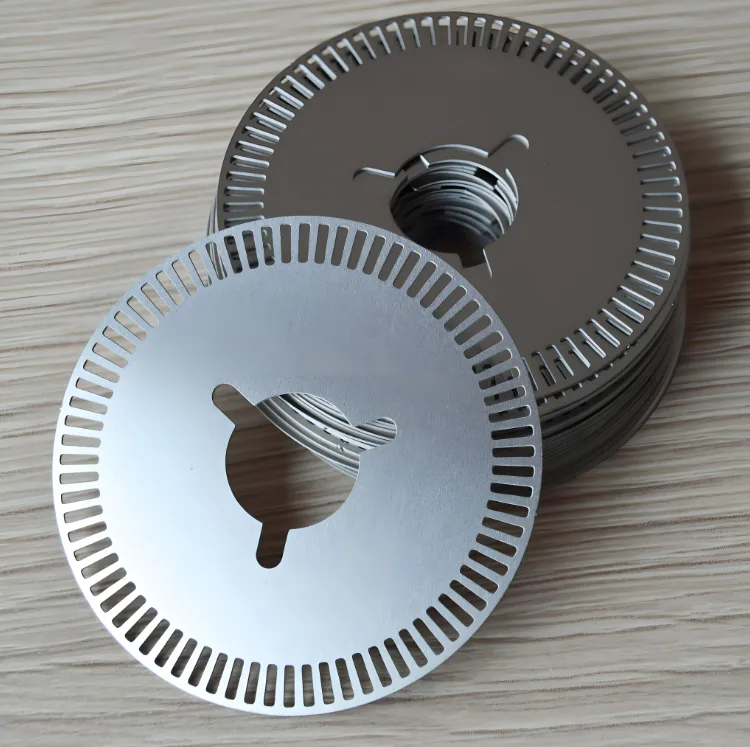
Material Matters: 316L vs. 17‑4PH Stainless Steel
| Property | 316L (Austenitic) | 17‑4PH (Martensitic) |
|---|---|---|
| Thermal Expansion | 16 × 10⁻⁶ /K | 10 × 10⁻⁶ /K |
| Yield Strength | 170 MPa | 1,100 MPa |
| Corrosion Resistance | Excellent* | Good |
| RPM Capability | Up to 20,000 | Up to 25,000 |
*Post‑etch passivation enhances 316L’s corrosion resistance for aggressive environments.
Signal Integrity Metrics
R&D teams evaluate:
- Jitter (ps) – pulse timing deviation
- Harmonic Distortion (%) – unwanted frequency components
- SNR (dB) – valid signal vs. noise floor
Testing Protocol: Spin at 5 k, 10 k, 15 k RPM, capture signals with a 1 GHz photodetector & oscilloscope, analyze edge steepness and baseline wander.
“Chemical milling reduces jitter by up to 30% and harmonic distortion by 25% compared to laser‑ablated gratings.” — IEEE Transactions on Instrumentation, 2022
Design Integration: Disk Thickness Optimization
- 0.1 mm: Ultralight, for aerospace; higher vibration sensitivity.
- 0.2–0.3 mm: Balance of stiffness and low thermal mass.
- 0.4–0.5 mm: High‑RPM spindles; max rigidity, higher inertia.
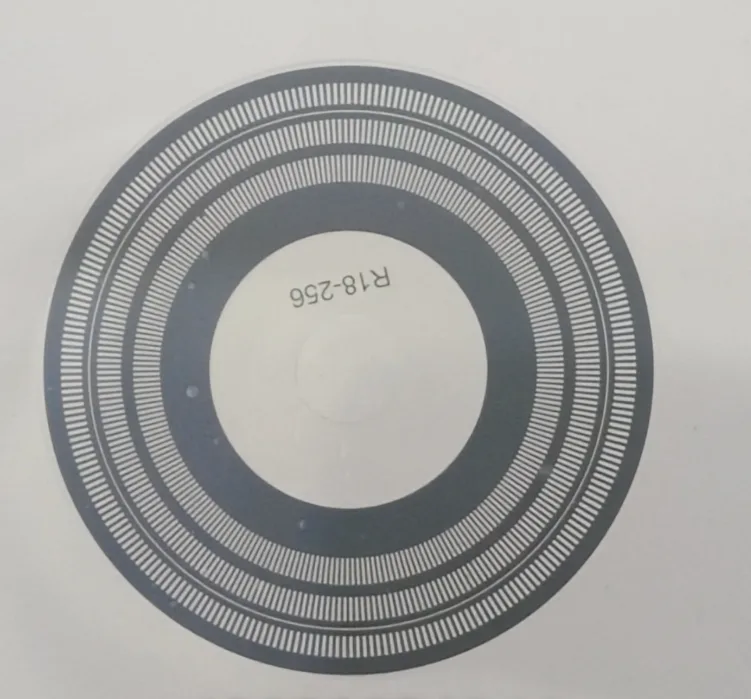
With Chemical milling stainless steel 17‑4PH, run‑out < 1 μm at 20,000 RPM is achievable—critical for semiconductor lithography and other precision industries.
Future Trends: Nanoscale Gratings for Quantum Encoders
The move toward **sub‑100 nm** pitch gratings leverages chemical milling with e‑beam lithography masks, paving the way for quantum‑grade encoder resolutions.
“Combining chemical etching and nanofabrication delivers encoder accuracies at the quantum limit.” — SPIE Photonics West, 2024
References
- Renishaw Technical Bulletin
- Heidenhain Encoder Selection Guide
- IEEE Transactions on Instrumentation, 2022
- SPIE Photonics West Conference, 2024
Frequently Asked Questions
What is the typical lead time and minimum order for Precision Gratings Explained?
Because etching needs no hard tooling, Precision Gratings Explained can be prototyped quickly and scaled to volume. Share your drawing and quantity and we will advise lead time.
Which industries use Precision Gratings Explained?
Precision Gratings Explained is used across electronics, medical, automotive, aerospace and industrial filtration — anywhere precise, burr-free thin-metal parts are required.
What is Precision Gratings Explained and how is it made?
Precision Gratings Explained is produced by photochemical etching — a process that uses a patterned resist and etchant to remove metal precisely, with no mechanical stress or burrs.
What tolerances can you achieve for Precision Gratings Explained?
Photochemical etching holds tight, repeatable tolerances on thin metal, which makes it well suited to Precision Gratings Explained. Exact figures depend on material and thickness.