
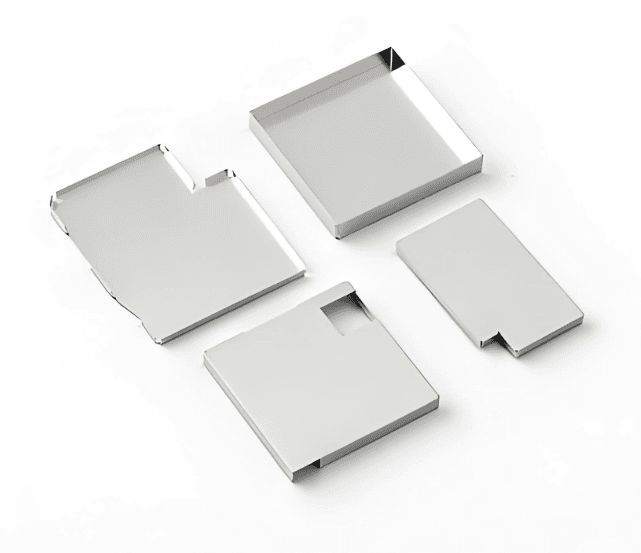
Beryllium Copper (BeCu) is the premier material for EMI shielding because it offers the highest electrical conductivity of any spring alloy. It allows for low-resistance grounding while providing the “spring back” needed to maintain contact over thousands of door-closing cycles.
However, because these strips feature delicate, comb-like “fingers,” traditional manufacturing can easily damage the metal’s performance. Chemical etching has become the industry standard for producing high-reliability BeCu shielding gaskets.
What are Chemical Etched Robust Fingerstock Strips?
A fingerstock strip is an EMI/RFI shielding gasket made of multiple spring-loaded “fingers.” When a cabinet door or a PCB shield is closed, these fingers compress to create a Faraday Cage, blocking unwanted signals.
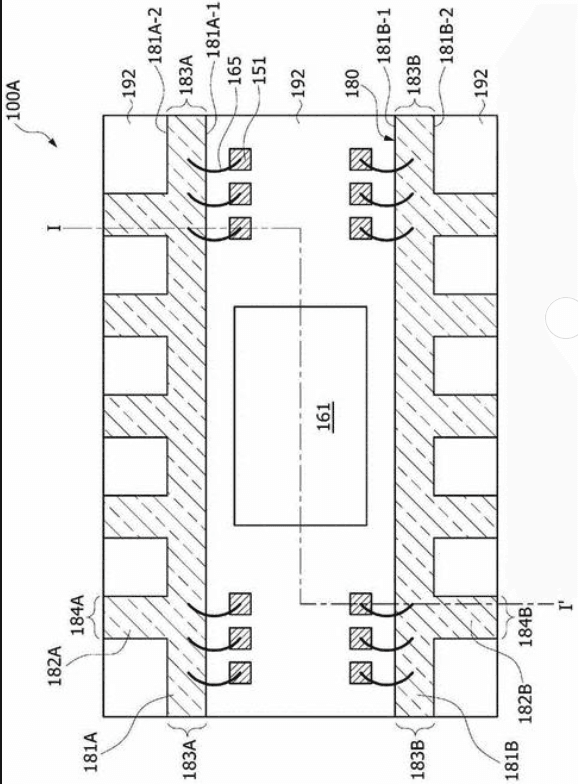
Through Chemical Etching (Photochemical Machining), these intricate strips are produced by selectively dissolving the BeCu sheet. Because the etchant works on all fingers simultaneously, it creates complex profiles—including “D-shapes,” “C-styles,” and ultra-low profile gaskets—that are perfectly uniform. This ensures that every single “finger” exerts the exact same pressure, providing a consistent grounding path.
Why Do We Need Chemical Etching for Fingerstock?
When you are sealing an enclosure against high-frequency interference, the “micro-geometry” of the gasket is critical.
- Burr-Free Electrical Contact: Stamping BeCu creates small burrs at the tip of each finger. These burrs can scratch delicate plating (like gold or silver) on the mating surface, leading to oxidation and poor grounding. Etching produces perfectly smooth edges that ensure a clean, broad contact area.
- Preserved Mechanical Memory: BeCu is often heat-treated to achieve its “spring” properties. Traditional mechanical cutting creates internal stress that can cause the fingers to lose their height over time. Etching is a stress-free process, meaning the fingers maintain their elasticity and “reach” for the life of the equipment.
- Ultra-Thin Precision: As electronics shrink, fingerstock must become thinner. Etching can easily handle foils as thin as 0.05 mm, creating narrow finger pitches that would be too fragile to survive a mechanical punch press.
Process Comparison: Chemical Etching vs. Stamping
For EMI shielding, the “batch” nature of etching provides a significant quality advantage over mechanical stamping.
| Feature | Chemical Etching | Hard Tool Stamping |
| Contact Quality | Smooth/Consistent | Burred/Scratched |
| Tooling Wear | None (Digital Tooling) | High (Die dulls over time) |
| Design Flexibility | High (Any shape) | Restricted by Die Geometry |
| Material Stress | Zero | High (Risk of micro-cracks) |
| Prototyping Cost | Low | Very High |
Technical Data: The Shielding Standard
To ensure MIL-STD-461 compliance for electromagnetic compatibility, etched fingerstock must meet these precision benchmarks:
- Tolerance: ±0.01 mm (Critical for ensuring even compression across a 24-inch server rack door).
- Thickness Range: 0.05 mm to 0.3 mm (Optimized for low-closure-force applications).
- Pitch Accuracy: Perfectly consistent spacing between fingers to ensure no “leaks” at high frequencies (GHz range).
Critical Applications: Protecting Sensitive Systems
Chemical etched BeCu fingerstock is the “first line of defense” in environments where signal integrity is a matter of safety or security.
1. Data Center Server Racks
In high-density Cloud Computing Hubs, fingerstock strips are used to seal server blades. The ±0.01 mm tolerance ensures that even as the racks vibrate from cooling fans, the grounding contact remains constant, preventing data corruption from EMI noise.
2. TEMPEST Military Communications
For Secure Communication Rooms and mobile command centers, fingerstock must provide 100dB+ of attenuation. Etched strips provide the seamless contact required to meet TEMPEST security standards, preventing electronic eavesdropping.
3. Medical MRI Room Doors
MRI machines use massive radio-frequency pulses. The doors to these rooms are lined with large BeCu fingerstock strips. Because the etched fingers are burr-free, they don’t snag on the door frame, ensuring the RF seal remains perfect for thousands of cycles.
4. Aerospace Avionics Bays
In fighter jets and commercial airliners, Flight Control Computers must be shielded from lightning strikes and radar interference. Etched BeCu fingerstock is used because it is lightweight and maintains its spring tension despite the extreme vibrations of flight.
Matched to this application by our engineering team. Configuration is confirmed against your part and volume.
Frequently Asked Questions
What is Chemical Etching Beryllium Copper Fingerstock Strips – EMI Grounding Contacts and where is it used?
Which metals can be used for Chemical Etching Beryllium Copper Fingerstock Strips – EMI Grounding Contacts?
What equipment is recommended for Chemical Etching Beryllium Copper Fingerstock Strips – EMI Grounding Contacts?
Can you handle both prototype and production volumes for Chemical Etching Beryllium Copper Fingerstock Strips – EMI Grounding Contacts?
Sources & References
- ASTM E407: Standard Practice for Microetching Metals and Alloys
- ASTM B912: Standard Specification for Passivation of Stainless Steels
- Photo Chemical Machining Institute — process capability guidelines
- NIST Engineering Statistics Handbook — process tolerance and capability
Standards are referenced for context. Always confirm parameters against the current published edition and your own process validation.