
In the world of high-precision engineering, the “plumbing” of the future isn’t made of pipes—it’s etched into metal. As medical diagnostics and chemical processing move toward extreme miniaturization, fluidic circuit plates have become the essential foundation for managing complex liquid and gas flows in microscopic spaces.
Stainless steel, specifically 316L Grade, is the industry’s top choice for these plates due to its exceptional corrosion resistance and mechanical strength. However, creating channels narrower than a human hair requires a level of finesse that traditional drills simply cannot provide.
What are Chemical Etched Robust Fluidic Circuit Plates?
A fluidic circuit plate is a thin metal substrate containing an intricate network of micro-channels designed to transport, mix, or cool fluids. These are often referred to as “Lab-on-a-Chip” components or micro-heat exchangers.
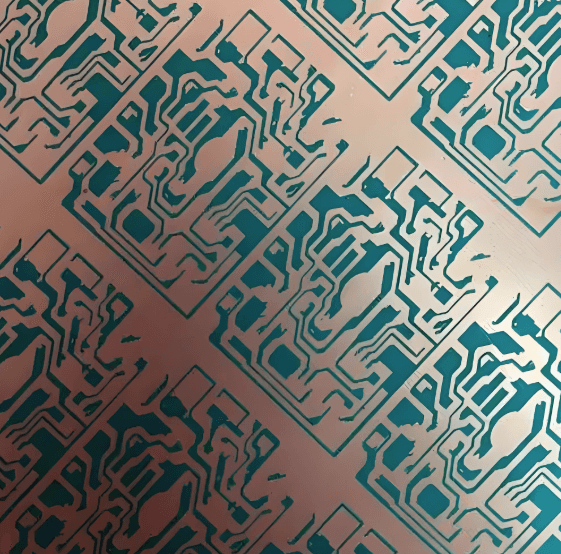
When manufactured via Chemical Etching (also known as Photochemical Machining), these channels are created by selectively dissolving the steel using high-precision chemical reagents. This process allows for the creation of multi-level paths and complex geometries on a single plate, enabling “fluidic logic” that would be impossible to achieve with mechanical tools.
Why Do We Need Chemical Etching for Micro-Channels?
In micro-fluidics, the “quality” of the channel wall is just as important as its shape. Here is why chemical etching is the mandatory process for high-performance plates:
- Ensuring Laminar Flow: To maintain predictable laminar flow, the internal surfaces of the channels must be perfectly smooth. Mechanical milling leaves “chatter marks” and burrs that cause turbulence. Etching produces a burr-free, mirror-like finish that ensures stable fluid dynamics.
- Perfect Flatness for Diffusion Bonding: Most fluidic circuits are made by stacking and bonding multiple etched plates. Any mechanical stress or “bowing” from stamping will prevent a gas-tight seal. Etching is a “cold” process that leaves the steel stress-free and perfectly flat.
- Complexity at Zero Cost: Whether your design has one channel or a thousand, the etching time is the same. This allows engineers to design complex fractal patterns for maximum heat transfer without increasing manufacturing costs.
Process Comparison: Chemical Etching vs. Alternative Methods
| Feature | Chemical Etching | CNC Micro-Milling | Laser Ablation |
| Edge Quality | Burr-free & Smooth | Heavy Burrs | Slag & Recast Layers |
| Material Stress | Zero (Chemical) | High (Mechanical) | Thermal Stress (HAZ) |
| Channel Resolution | Ultra-Fine | Limited by Bit Size | High |
| Surface Finish | Ra 0.4 – 0.8 microns | Rough/Ribbed | Varying/Charred |
| Scalability | High (Batch Processing) | Low (Serial) | Moderate |
Technical Data: Precision Specifications
To meet the rigorous standards of the aerospace and medical industries, chemical etching provides the following data-driven metrics:
- Dimensional Tolerance: +/- 0.01 mm (Essential for precise volumetric flow control).
- Material Thickness: 0.05 mm to 0.3 mm (Allowing for ultra-compact, high-density plate stacks).
- Channel Depth Consistency: Within +/- 5% across the entire plate surface, ensuring uniform pressure drops.
Critical Applications: Where Precision Fluidics are Vital
Chemical etched stainless steel plates are the core components in high-reliability equipment where “leaks” or “clogs” are not an option.
1. Medical DNA Sequencers
In Automated DNA Sequencing Equipment, etched plates act as the distribution manifold for reagents. The +/- 0.01 mm tolerance ensures that nanoliter volumes are delivered with perfect timing, which is critical for accurate genetic mapping.
2. High-Performance Liquid Chromatography (HPLC)
HPLC systems operate under massive pressures. Etched 316L plates are used in Gradient Mixers and Injection Valves because they can handle aggressive solvents without leaching metal ions into the sample, preserving the purity of the chromatographic analysis.
3. Micro-Reaction Technology (MRT)
In the pharmaceutical industry, Micro-Reactors utilize these plates to perform dangerous chemical reactions in tiny volumes. The high surface area provided by 0.3 mm plates allows for instant heat removal, preventing “runaway” reactions and making chemical manufacturing safer and more efficient.
4. Hydrogen Pre-Cooling Systems
In Hydrogen Refueling Stations, etched micro-channel heat exchangers (MCHEs) are used to cool hydrogen gas to -40°C before it enters a vehicle’s tank. The robustness of etched stainless steel allows these plates to survive the high-pressure cycles required for rapid fueling.
By moving away from traditional mechanical machining and embracing the precision of chemical etching, manufacturers can produce fluidic architectures that are lighter, smoother, and more reliable than ever before.
Matched to this application by our engineering team. Configuration is confirmed against your part and volume.
Frequently Asked Questions
How does etching compare with stamping or laser cutting for Chemical Etching Stainless Steel Fluidic Circuit Plates – Micro-Channel Networks?
What tolerances are achievable for Chemical Etching Stainless Steel Fluidic Circuit Plates – Micro-Channel Networks?
What lead time should I expect for Chemical Etching Stainless Steel Fluidic Circuit Plates – Micro-Channel Networks?
Which metals can be used for Chemical Etching Stainless Steel Fluidic Circuit Plates – Micro-Channel Networks?
Sources & References
- ASTM E407: Standard Practice for Microetching Metals and Alloys
- ASTM B912: Standard Specification for Passivation of Stainless Steels
- Photo Chemical Machining Institute — process capability guidelines
- NIST Engineering Statistics Handbook — process tolerance and capability
Standards are referenced for context. Always confirm parameters against the current published edition and your own process validation.