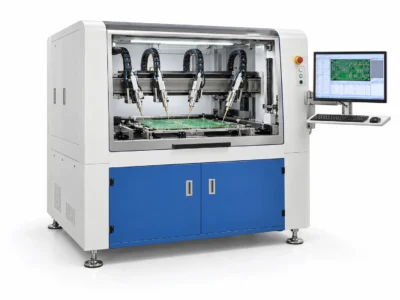
Inspection & Quality
Flying Probe Tester
Precision inspection & quality equipment specified to your panel size, throughput, and automation level.
View details
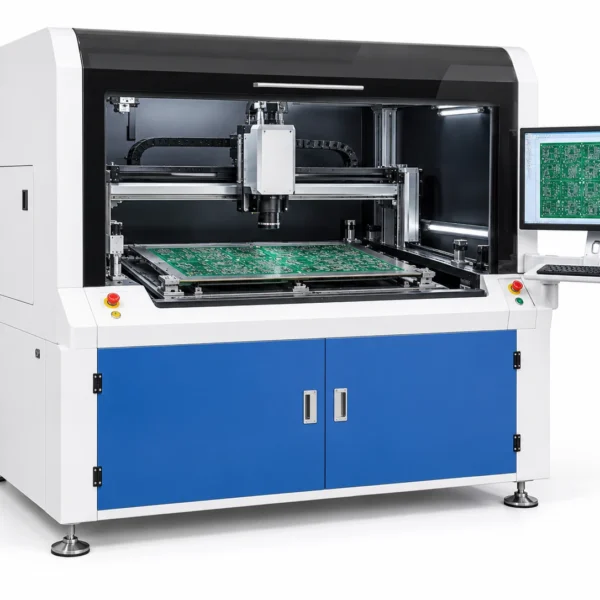
A configured-to-order inspection & quality system for PCB production lines, built and supported in-house.
The AOI Machine (WET-QC-01) handles a defined step in the PCB process flow as part of the inspection & quality group. It is normally specified together with the cells immediately upstream and downstream of it, which is where most of the yield and cycle-time gains actually come from.
This inspection & quality system is designed to slot into a conveyorized, automated line or run as a standalone cell. The interfaces to upstream loading and downstream handling are configured so material moves cleanly through the inspection & quality step without bottlenecks.
Used for inner-layer and final inspection and electrical test across high-reliability and high-volume production.
The AOI Machine is assembled and tested in-house. Electrical, air, water, and exhaust requirements are detailed in the installation drawing issued before delivery. After commissioning we provide process guidance and spares documentation to keep uptime high.
Let us know what the AOI Machine needs to do on your line. We will confirm the configuration, throughput, and price, and outline how it integrates with the surrounding stages.
Standards are referenced for context. Always confirm parameters against the current published edition and your own process validation.
| Model | WET-QC-01 |
|---|---|
| Maximum panel size | 610 x 610 mm |
| Board types supported | Rigid, multilayer, HDI (flex / rigid-flex optional) |
| Automation level | Automatic (PC/CNC controlled) |
| Control system | Industrial PC + vision/software |
| Throughput | 30-60 panels/hour |
| Resolution | Line/space to 25 µm; registration ±15 µm |
| Power supply | 3-phase 380-415 V AC, 50/60 Hz |
Besides complete production lines we supply spare parts and consumables for PCB drilling and routing machines:
Precision inspection & quality equipment specified to your panel size, throughput, and automation level.
View details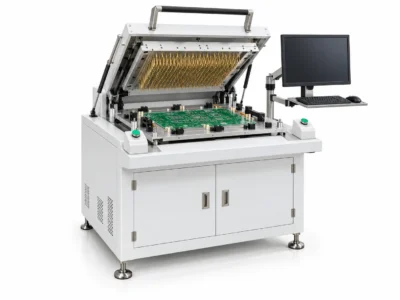
Precision inspection & quality equipment specified to your panel size, throughput, and automation level.
View details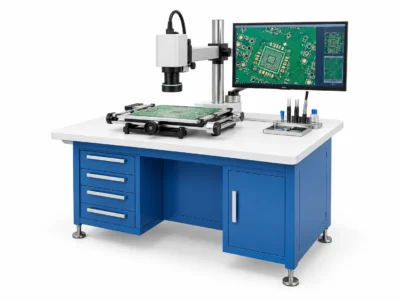
A configured-to-order inspection & quality system for PCB production lines, built and supported in-house.
View details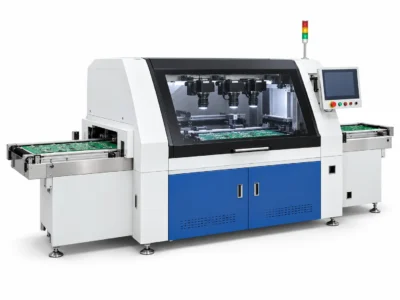
Built-to-spec inspection & quality system for fabricators who need repeatable yield and predictable cycle times.
View details