Inspection & Quality
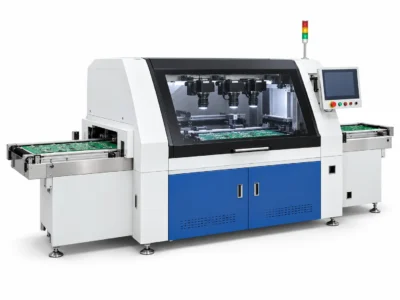
AVI Final Inspection Machine
Built-to-spec inspection & quality system for fabricators who need repeatable yield and predictable cycle times.
View details
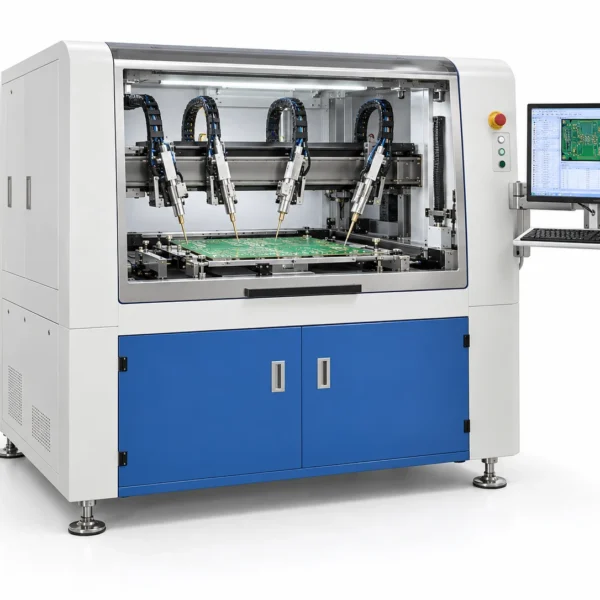
Precision inspection & quality equipment specified to your panel size, throughput, and automation level.
The Flying Probe Tester (WET-QC-06) is a production-grade inspection & quality system. Rather than a one-size-fits-all unit, it is built to a specification confirmed with your team — panel handling, control software, throughput, and material compatibility are all set to your mix.
During the inspection & quality stage the Flying Probe Tester processes each panel to a repeatable standard. Process values are driven by recipe, so results stay consistent across shifts and operators rather than depending on manual judgement.
Used for inner-layer and final inspection and electrical test across high-reliability and high-volume production.
This is not an off-the-shelf machine. We confirm your panel size, throughput target, and facility services first, then propose a configuration of the Flying Probe Tester that fits. Installation guidance and commissioning support are included so the line reaches stable output quickly.
Tell us your panel size, throughput, and automation requirements for the Flying Probe Tester. Our engineers will respond with a tailored configuration and price, usually within one business day.
Standards are referenced for context. Always confirm parameters against the current published edition and your own process validation.
| Model | WET-QC-06 |
|---|---|
| Maximum panel size | — |
| Board types supported | Rigid, multilayer, HDI (flex / rigid-flex optional) |
| Automation level | Automatic (PC/CNC controlled) |
| Control system | Industrial PC + vision/software |
| Throughput | 30-60 panels/hour |
| Resolution | Line/space to 25 µm; registration ±15 µm |
| Power supply | 3-phase 380-415 V AC, 50/60 Hz |
Besides complete production lines we supply spare parts and consumables for PCB drilling and routing machines:
Built-to-spec inspection & quality system for fabricators who need repeatable yield and predictable cycle times.
View details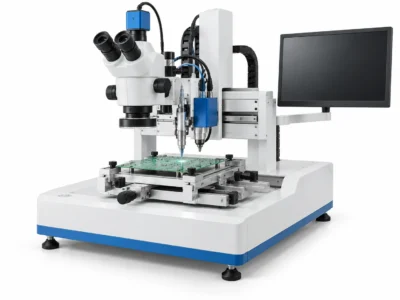
A configured-to-order inspection & quality system for PCB production lines, built and supported in-house.
View details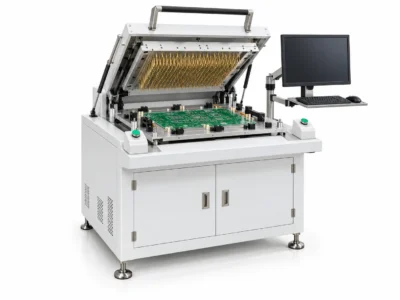
Precision inspection & quality equipment specified to your panel size, throughput, and automation level.
View details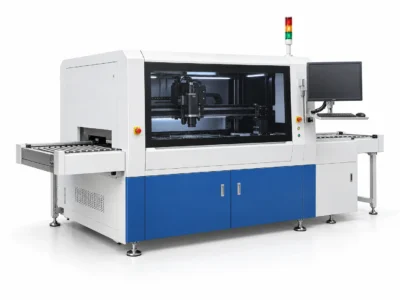
Engineer-configured inspection & quality equipment for consistent results across rigid, multilayer, and HDI boards.
View details