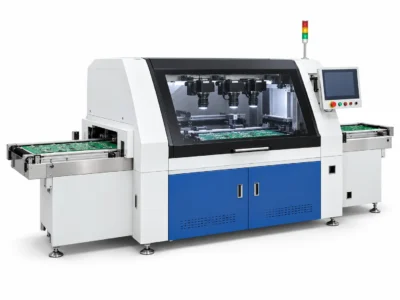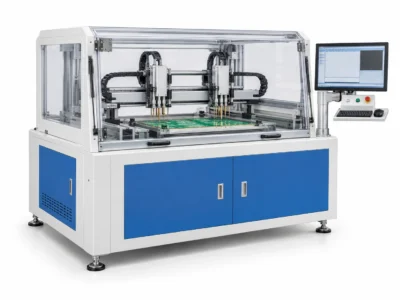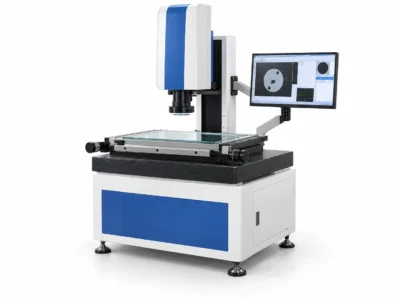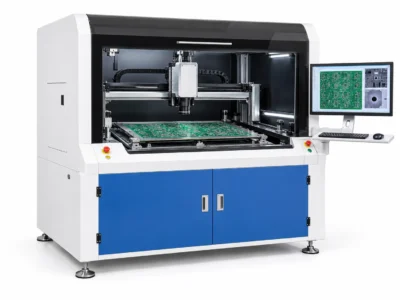
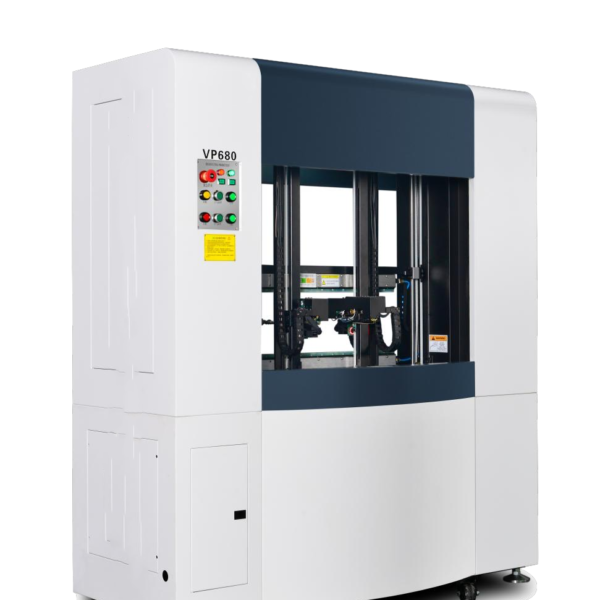
Features
Average O/S Test Speed Increases By More Than 30%
The Average Test Efficiency Of Low Resistance And Pure Resistance Is Increased
By More Than 50%
Frequently Asked Questions
What level of automation does the PCB Flying Probe Tester offer?
Operation is recipe-driven through an operator interface, with process values logged so that results stay repeatable across shifts and operators.
What materials is the PCB Flying Probe Tester suitable for?
Material compatibility is confirmed against your substrate during process qualification. A small sample run is the fastest way to validate fit before committing to production.
How is throughput determined for the PCB Flying Probe Tester?
Throughput depends on material thickness, feature density, and the inspection target. We size the machine against your real production mix rather than a single nominal number.
What lead time and support come with the PCB Flying Probe Tester?
Lead time is quoted per order once the configuration is fixed. Installation guidance, commissioning support, and spare-parts documentation are provided so the line reaches stable output quickly.
Sources & References
- IPC-A-600: Acceptability of Printed Boards
- IPC-6012: Qualification and Performance Specification for Rigid Printed Boards
- Photo Chemical Machining Institute — process capability guidelines
- NIST Engineering Statistics Handbook — process tolerance and capability
Standards are referenced for context. Always confirm parameters against the current published edition and your own process validation.