Drilling & Via Formation
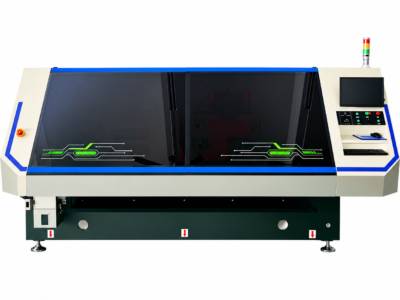
WET-AS-4ZH 4 Spindles PCB Drilling and Routing Machine
WET-AS-4ZH 4 Spindles PCB Drilling and Routing Machine
View details
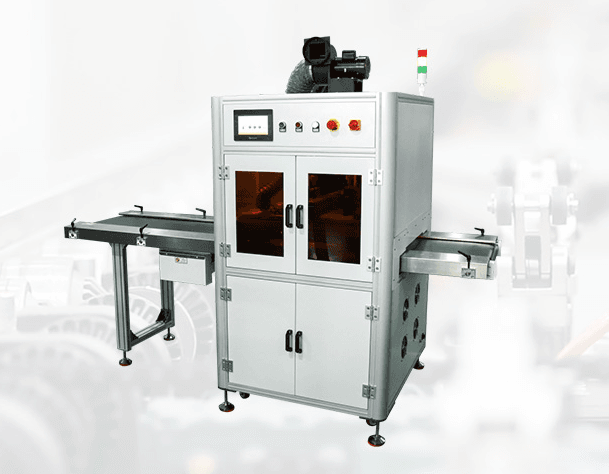
Plasma Surface Treatment Machine engineering specification: bath, conveyor, temperature, rinse and control specifications used on our production lines, plus links to the materials, recipes and applications this equipment serves.
Industrial plasma surface treatment machine that uses low-pressure plasma to clean, activate, and modify the surfaces of plastics, metals, glass, and ceramics. Plasma is generated in a controlled low-pressure environment, where ions, electrons, and excited molecules interact with the material surface to remove oils, dirt, and oxides, increase surface energy, and promote far stronger bonding for downstream coating, painting, plating, or adhesive assembly. Environmentally friendly — no solvents, no rinse water.
| Plasma generation | Low-pressure (vacuum-assisted) RF, DC, or microwave excitation per build option |
|---|---|
| Treatment types | Low-temperature plasma (heat-sensitive substrates) · DC plasma (metals) · RF plasma (broad-spectrum) · microwave plasma (high-intensity activation) |
| Compatible materials | Plastics (PE, PP, PTFE, PEEK), metals (SS, Al, Cu, Ti), glass, ceramics, polymer films |
| Process effects | Cleaning (oil/oxide removal), activation (surface energy increase), etching at micro-scale, functionalization (adding -OH / -NH₂ groups) |
| Typical chamber size | 80 – 600 L (rack and shelf configurations available) |
| Cycle time | 30 seconds – 30 minutes depending on substrate and target effect |
| Environmental footprint | Dry process — no solvents, no rinse, no liquid waste stream |
| Target industries | Automotive (paint adhesion), electronics (wire bond, conformal coat adhesion), packaging (printing on polymer film), medical device (sterile surface prep) |
| Control system | Recipe-driven, with chamber-pressure, gas-flow, RF-power, and treatment-time logging |

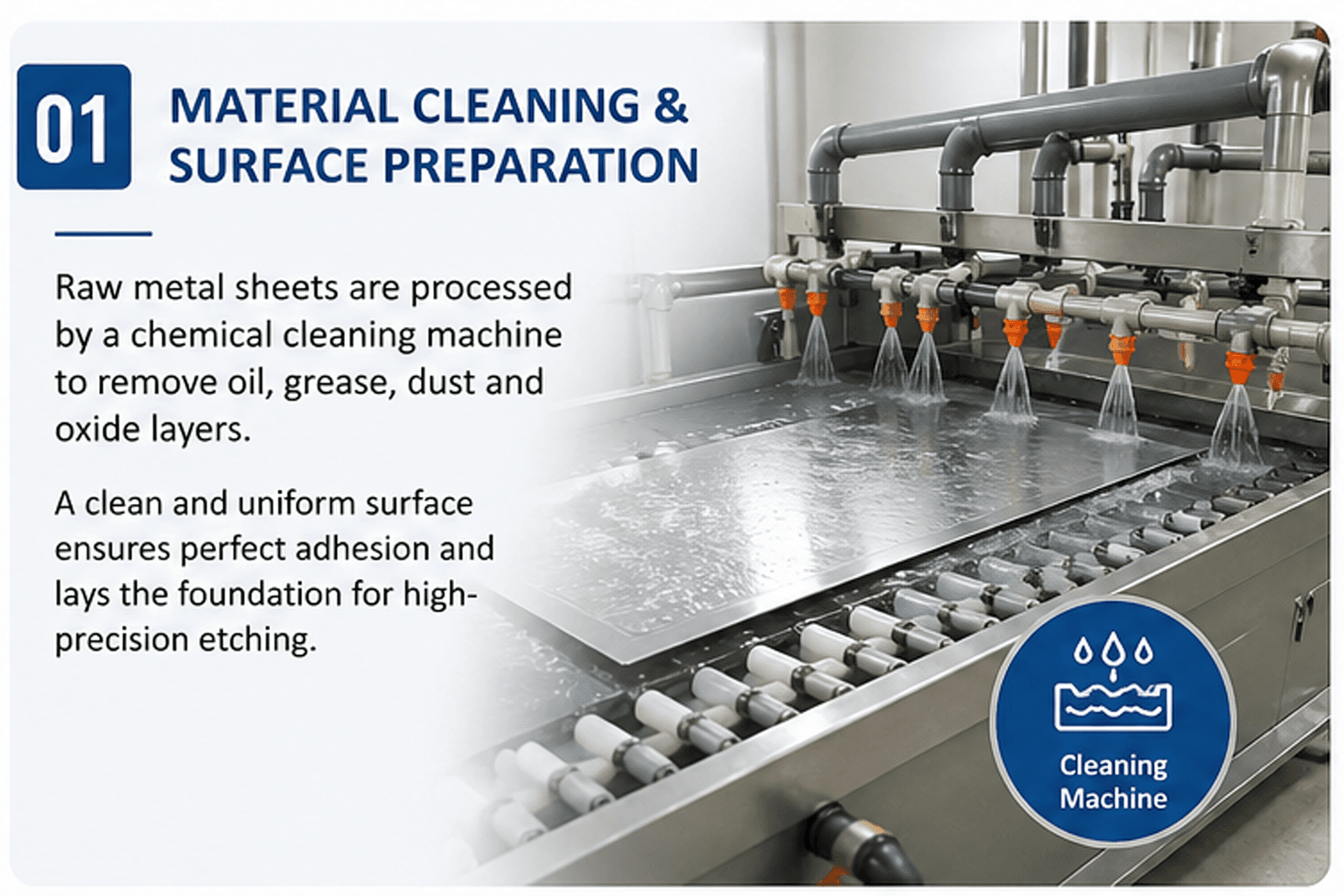
Plasma is not one process — it is a family of surface-modification processes that share the same physics (an ionized gas) but use different power sources and gas chemistries to achieve different effects. Choosing the right mode is the difference between a clean adhesion bond and a debonded reject six weeks later.
Request Quote / Layout Drawing Browse Process Library Search Parameter Database
Every formula and parameter row below is a live page on this site with the full chemistry, conveyor speed, and tolerance window for the exact material-thickness-etchant combination. These are the references our process engineers cite from on production shifts.
Standard packages include on-site commissioning, operator training, and one year of remote process support. Spare-parts kits and bath-titration consumables are quoted separately.
Footprint ranges from a single-bench all-in-one unit up to 12 – 25 m floor length for a full production line. Layout drawings are part of the proposal package.
Yes — wetted-parts upgrades (e.g. FeCl₃ → HF-compatible) and additional stages are planned-shutdown retrofits.
Yes. Every system is built around your panel size, throughput target, available utilities, and downstream process integration — not sold as a fixed SKU.
Standards are referenced for context. Always confirm parameters against the current published edition and your own process validation.
| Selling Price: |
|---|
Besides complete production lines we supply spare parts and consumables for PCB drilling and routing machines:
WET-AS-4ZH 4 Spindles PCB Drilling and Routing Machine
View details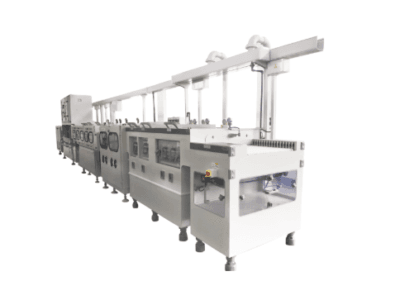
High-performance combined chemical + mechanical surface preparation line. Micro-corrosion etches the copper surface, an abrasive grinding…
View details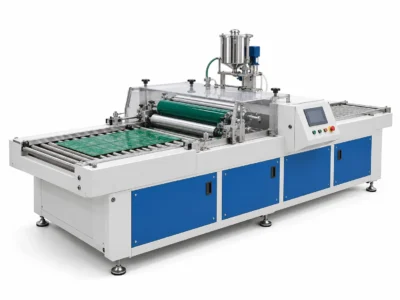
Production-grade solder mask & printing machinery, integrated to match your line and validated before shipment.
View details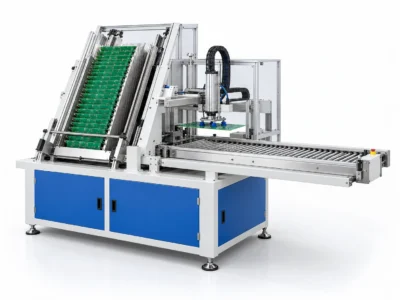
Engineer-configured factory automation equipment for consistent results across rigid, multilayer, and HDI boards.
View details