
0Cr21Al6Nb · FeCl₃+HCl
Chemical Etching Formula
0Cr21Al6Nb
with FeCl₃+HCl
Formula Summary
The table below summarizes every parameter that defines this etching formula. Values listed as ranges scale with sheet thickness across the supported band.
Why FeCl₃+HCl for 0Cr21Al6Nb?
On 0Cr21Al6Nb, the ferric chloride system attacks the alloy's oxide layer continuously while ferric ions drive dissolution. It is regenerable, compatible with standard photolithography, and produces clean burr-free edges — which is why nearly every 0Cr21Al6Nb etch line runs a variant of this formula.
Process Window & Bath Control
Bath control for 0Cr21Al6Nb in FeCl₃+HCl: temperature 50°C, concentration 44 °Bé, specific gravity 1.410. The recipe is tuned for through etch (double-sided). Conveyor speed is the primary throughput control, ranging 0.17-0.9 m/min across the supported thickness range. Check specific gravity each shift with a calibrated hydrometer and correct with fresh make-up or water as needed.
Design Rules & Tolerances
When laying out artwork for 0Cr21Al6Nb at through etch (double-sided), plan for a minimum hole diameter in the 120-360 μm range and a minimum line width in the 100-300 μm range, depending on the chosen sheet thickness within 0.1-0.3 mm. The etch factor of ~2.60 and undercut range of 19-58 μm determine how much the mask must be biased to land the finished dimension on target.
• Minimum hole diameter range: 120-360 μm
• Minimum line width range: 100-300 μm
• Single-side undercut range: 19-58 μm
• Typical etch factor (EF): 2.60
Yield & Production Economics
Typical mass-production yield for 0Cr21Al6Nb in the FeCl₃+HCl system is 95.9%, within an observed range of 95.6-96.2%. The dominant yield-loss modes are photoresist pinhole defects and rinse-water contamination. Improving incoming sheet quality and photoresist coating consistency gives the highest yield-improvement leverage for this formula.
Typical Applications
Parts produced with the FeCl₃+HCl formula on 0Cr21Al6Nb are common in wear-resistant blades, springs, and high-temperature precision parts. The burr-free, stress-free nature of chemical etching makes it the preferred process wherever flatness and edge quality matter more than raw throughput.
Process Equipment & Material Reference
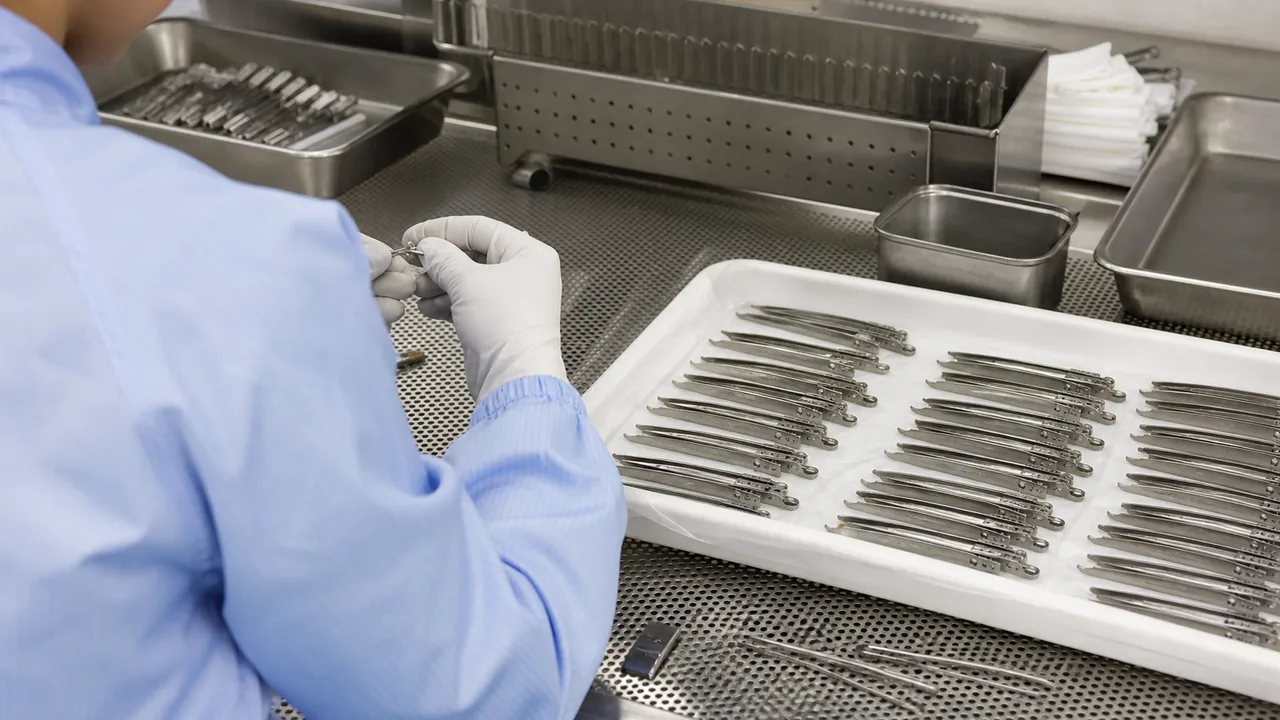
Production of 0Cr21Al6Nb parts using the FeCl₃+HCl formula described above runs on a wet chemical etching machine configured for through etch (double-sided). The bath chemistry, conveyor speed, and rinse cascade detailed on this page reflect the operating profile we use on a live spray-etching line for this alloy.
For a broader treatment of the material itself — alloy variants, surface preparation, and process limits across thickness ranges — see our Cobalt chemical etching guide. That overview complements the formula-specific bath and conveyor data on this page.
Production Use Cases for This Formula
Production examples for the 0Cr21Al6Nb / FeCl₃+HCl recipe span juicer filtration mesh etching, stainless steel shower-head filter mesh, and stainless filtration mesh for vacuum cleaners. In every case, the etch factor and undercut figures on this page are the dominant tolerance drivers — bath maintenance discipline matters more than equipment headline rating.
Adjacent applications usually transfer onto this same formula with no chemistry change, sometimes only a conveyor speed tweak. Drop a drawing and a target volume and we will return a process card built off the parameters on this page.
More Cobalt Alloys Formulas
Other formulas in the same material family.
Frequently Asked Questions
Sources & References
- ASTM E407: Standard Practice for Microetching Metals and Alloys
- ASTM B912: Standard Specification for Passivation of Stainless Steels
- Photo Chemical Machining Institute — process capability guidelines
- NIST Engineering Statistics Handbook — process tolerance and capability
Standards are referenced for context. Always confirm parameters against the current published edition and your own process validation.
Need a Quote for This Process?
WET Etched runs production wet chemical etching lines using the FeCl₃+HCl chemistry. Send us your part drawing and quantity for a full process quote.