
Laser Micro Etching Equipment Market Gains Momentum With Precision at Its Core
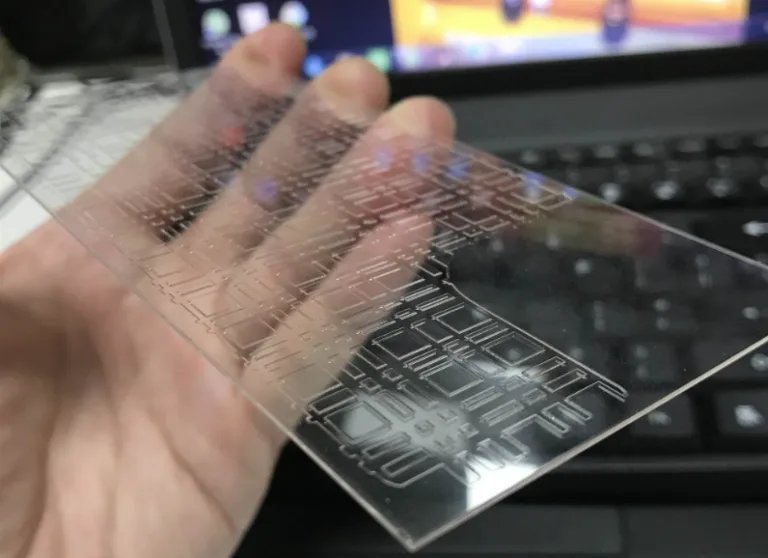
The fabrication landscape for intricate components relies heavily on advanced material processing techniques. Among these, laser micro etching has emerged as a cornerstone for creating ultra-fine features on metals, ceramics, and polymers. Its non-contact nature and ability to produce precise geometries without mechanical stress have made it indispensable in high-tech manufacturing. A recent market analysis on openPR.com highlights how the relentless pursuit of precision is propelling the market share of laser micro etching equipment, setting the stage for sustained expansion across key industrial verticals.
Why This Matters
Precision etching is a linchpin in the production of next-generation devices where tolerances are measured in microns. The ability to achieve consistent, damage-free microstructures directly impacts yield, performance, and reliability in sectors like aerospace, medical implants, and microelectronics. As product designs become more compact and functional, the equipment enabling these capabilities becomes a strategic asset, influencing supply chains and innovation cycles. This market’s trajectory reflects broader trends in advanced manufacturing, where process control and miniaturization define competitive leadership.
FAQ
Why is precision so critical in laser micro etching?
Precision determines the dimensional accuracy and surface quality of micro-features such as channels, holes, and textures. In medical devices, for instance, slight deviations can affect biocompatibility or fluid flow. In electronics, precise etching ensures reliable interconnects and signal integrity. Laser systems with advanced beam delivery and real-time monitoring can achieve sub-micron repeatability, minimizing defects and material waste.
How does laser micro etching differ from conventional etching methods?
Laser micro etching uses focused light pulses to ablate material without chemical baths or physical contact, reducing contamination and thermal stress. Unlike wet chemical etching, it is a maskless, dry process capable of machining complex 3D geometries on hard materials. It also offers superior edge quality and can be digitally controlled for rapid prototyping, whereas conventional methods often require tooling and longer setup times.
What technologies are driving improvements in laser micro etching equipment?
Ultrafast lasers, such as femtosecond and picosecond systems, are enabling cold ablation with negligible heat-affected zones. Beam shaping optics, galvo scanners, and adaptive focusing units enhance precision and speed. Integration with machine vision and AI-based process control further refines etch depth and uniformity, making the equipment suitable for high-volume, high-mix production environments.
Which industries are the primary adopters of laser micro etching equipment?
The semiconductor industry uses it for wafer dicing and interposer structuring. Medical device manufacturers rely on it for stent fabrication, implant texturing, and microfluidic chips. The automotive sector employs it for fuel injection nozzles and sensor components. Aerospace firms utilize the technology for turbine blade cooling holes and lightweight structural features. The consumer electronics segment also leverages it for decorative markings and functional surface modifications.