
Precision Drives Growth in Laser Micro Etching Equipment Market
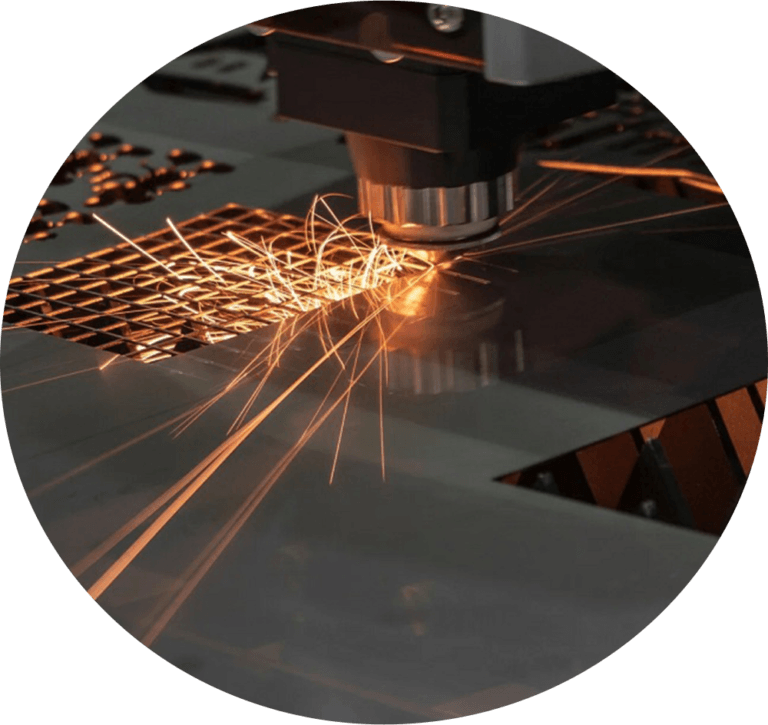
The relentless miniaturization of electronic components and medical devices has turned manufacturing precision into a competitive necessity. As feature sizes plunge deeper into the micron and sub-micron scale, the ability to selectively remove material without causing thermal or mechanical damage now dictates production viability. Within this context, laser micro etching equipment is carving out a larger share of the market, propelled by its unique capacity to deliver exceptional accuracy and process control.
The Critical Role of Precision in Modern Manufacturing
Precision is no longer a desirable trait but a baseline requirement across a growing number of high-tech sectors. In semiconductor fabrication, for instance, interconnects and vias demand etching processes that leave virtually no kerf or recast layer. Similarly, medical implant manufacturers rely on controlled surface texturing to improve biocompatibility, where even a micrometre deviation can compromise device performance.
Laser micro etching meets these demands through non-contact material removal that minimizes stress on substrates. The technology can produce features with sub-micrometre resolution, making it indispensable for next-generation microfluidic channels, MEMS structures, and advanced printed circuit boards. This inherent capability is the primary driver behind its expanding market footprint.
Laser Micro Etching vs. Traditional Methods
The etching landscape includes several well-established techniques, each with distinct trade-offs. In contrast to traditional Wet Chemical Etching Processing Equipment – Wet Chemical Etching Machine, laser-based systems offer greater directional control and eliminate the undercutting that often limits pattern fidelity in isotropic processes. Dry etching methods like reactive ion etching provide anisotropy but may require complex vacuum systems and aggressive chemicals.
Laser ablation stands out by enabling maskless patterning directly from digital files, reducing setup time and waste. Its flexibility to process a wide range of materials—from metals and ceramics to polymers and thin films—further strengthens its value proposition. These advantages translate into higher throughput and lower per-unit costs for prototypes and medium-volume production runs.
Key Industries Fueling Demand
Semiconductor and Electronics
The semiconductor industry remains the largest consumer of precision etching equipment. As chip architectures adopt 3D stacking and chiplets, laser micro etching is used for scribing, via drilling, and thin-wafer processing. The transition to advanced packaging technologies demands defect-free results that only laser tools can consistently deliver.
Medical Devices and Life Sciences
Medical applications are another powerful growth engine. Catheters, stents, and biosensors require micro-textured surfaces to control cell adhesion, fluid dynamics, or drug elution. Laser etching enables the creation of these intricate topographies without introducing contaminants, aligning with stringent FDA and ISO requirements for cleanliness and repeatability.
Automotive and Aerospace
Rising adoption of lightweight materials and smart sensors in vehicles and aircraft is opening new avenues. Laser micro etching is employed to fabricate tiny cooling channels in engine components, mark identification codes on critical parts, and structure surfaces for improved bonding. The technology’s ability to maintain accuracy on curved or delicate substrates is particularly valued in these sectors.
Technological Advancements Enhancing Capabilities
Ongoing innovation continues to expand the performance envelope of laser micro etching equipment. Ultrafast lasers with pulse durations in the femtosecond and picosecond range now enable “cold” ablation, which virtually eliminates heat-affected zones. This allows processing of heat-sensitive materials like polymers and bioactive coatings without denaturation. Combined with real-time beam monitoring and adaptive optics, modern systems can maintain sub-micrometre precision even on large-area production runs.
Integration with AI-powered process models is another frontier. These models adjust laser parameters on the fly based on in-situ sensor feedback, ensuring consistent quality across variable material batches. As a result, manufacturers gain traceability and yield improvements that were previously unattainable with manual tuning.
Market Outlook and Challenges
Analysts expect the laser micro etching equipment market to sustain a healthy growth trajectory as new applications emerge in 5G infrastructure, augmented reality optics, and flexible electronics. The shift toward decentralized production and reshoring of critical component manufacturing may further accelerate investments in compact, automated etching workstations.
Yet, high capital costs and the need for skilled operators remain barriers for smaller firms. Furthermore, competition from alternative high-precision methods—such as focused ion beam and advanced lithography—could segment the market. Addressing these challenges will require equipment makers to emphasize modularity, ease of integration, and lower total cost of ownership.
How will laser micro etching equipment evolve to balance the demands of nanometre-level precision with the economic realities of high-volume manufacturing?
Why This Matters
The expansion of the laser micro etching market underscores a fundamental shift in manufacturing: precision has become the primary differentiator. As devices shrink and material requirements grow more complex, the ability to etch features without damage or contamination is no longer optional. This trend signals that companies investing in laser-based fabrication will be better positioned to meet the exacting standards of next-generation electronics, medical implants, and smart sensors.
FAQ
Why is precision so critical in micro etching applications?
Precision directly impacts product functionality, reliability, and safety. In semiconductors, inaccurate etching can cause short circuits or signal loss; in medical implants, surface roughness variations may lead to bacterial adhesion or poor tissue integration. Laser micro etching provides the consistent, repeatable results needed to meet tight tolerance windows.
How does laser micro etching compare to wet chemical etching?
Laser micro etching is a maskless, non-contact process that offers superior edge definition and avoids the isotropic undercutting common in wet chemical etching. While wet methods can be cost-effective for large-area, less critical features, laser etching excels when the design requires micron-level accuracy on complex, heat-sensitive materials.
What industries benefit most from laser micro etching equipment?
Semiconductor and electronics manufacturing are primary users, leveraging the technology for via drilling and wafer scribing. The medical device sector also heavily relies on it for micro-texturing implants and catheters. Automotive and aerospace industries are emerging adopters, using laser etching for fuel injection nozzles, sensors, and lightweight components.
What technologies are advancing laser micro etching capabilities?
Ultrafast lasers (femtosecond and picosecond) enable cold ablation, minimizing heat damage to sensitive substrates. Adaptive optics, real-time beam diagnostics, and AI-driven process control further enhance accuracy and throughput. These innovations reduce part rejection rates and allow consistent results across large production runs.