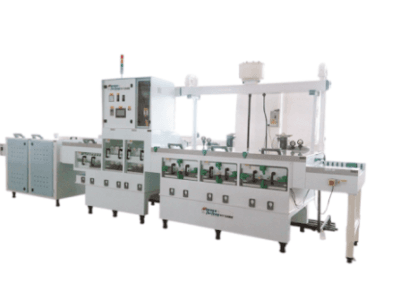
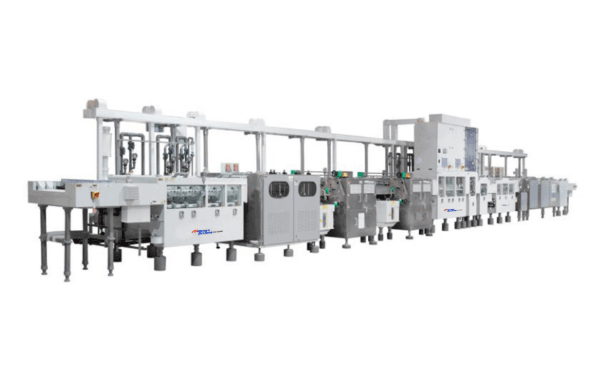
PCB Plate Grinding & Brushing Machine
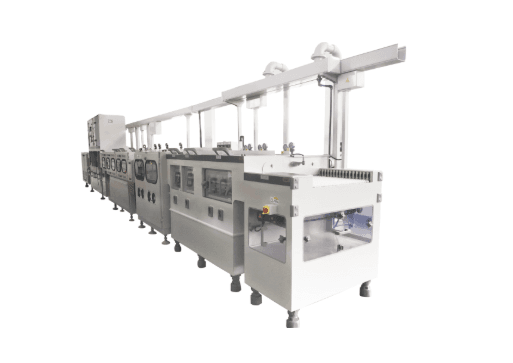
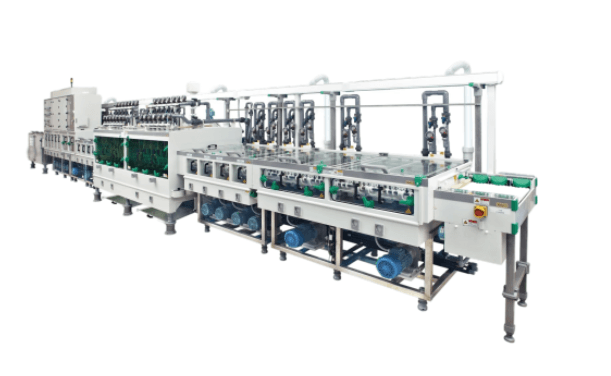
Mechanical surface preparation line that combines acid pickling, two-stage abrasive plate grinding, and medium-pressure water washing into a single conveyorized pass. The two grinding heads carry replaceable brush or non-woven abrasive rolls that remove the thin copper oxide layer mechanically rather than chemically, leaving a uniformly bright, lightly-textured copper surface ready for photoresist lamination. Required step ahead of fine-line PCB lithography.
Why This Equipment
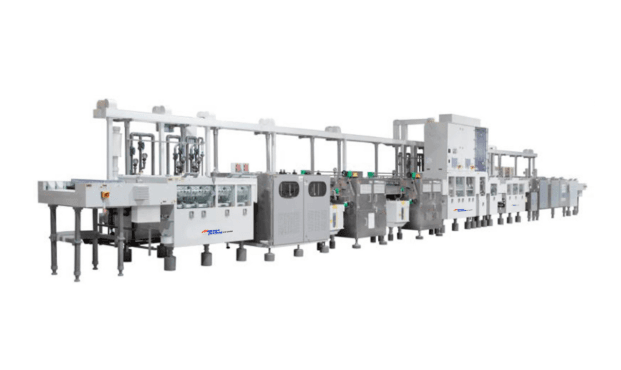
- Two independent grinding heads — first head establishes the texture; second head finishes and removes the swarf from the first.
- Brush pressure adjustable per recipe — soft press for thin foil, firm press for heavy copper.
- Acid pickle UPSTREAM of grinding — the pickle removes oxide chemistry first so the grinding head only does mechanical work, not oxide stripping.
- Medium-pressure wash between grinding and final rinse — dislodges grinding swarf that low-pressure rinse misses.
- Replaceable grinding media — brush and non-woven rolls swap in minutes, no full machine teardown.
Engineering Specifications
Where This Equipment Fits in the Production Line
Plate grinding is run BEFORE photoresist lamination — it prepares the copper surface for dry-film or liquid-resist adhesion. Downstream is the Developing Machine; upstream is incoming bare PCB stock or a prior Brown Oxidation step. Often combined with the Jet Master Brushing Machine for higher-finish work.
Request Quote & Layout Browse Process Library Search Parameter Database
Related Equipment in This Production Line
Related Recipes & Process Parameters
Every formula and parameter row below is a live page on this site with the full chemistry, conveyor speed, and tolerance window for the exact material-thickness-etchant combination. These are the references our process engineers cite from on production shifts.
Related Material References
Related Production Applications
Related Process Equipment
Frequently Asked Questions
What is included in commissioning?
On-site installation supervision by our engineering team, full mechanical and electrical commissioning, recipe loading and validation against three reference panel formats, operator training (typically 3–5 days), and one year of remote process support.
What is the typical lead time from order to delivery?
Standard configurations: 8–12 weeks. Non-standard customizations: 12–16 weeks. Lead time includes mechanical build, electrical commissioning, bath chemistry validation on our pilot line, and packaged shipment.
Is the machine customized to my production line?
Yes. Every system is built around your panel size, throughput target, available utilities, and downstream process integration. Standard dimensions in the spec table are the most-ordered configurations, but length, width, and bath sequence are all configurable.
Why grind a board mechanically when chemical cleaning is available?
Mechanical grinding produces a uniform micro-rough surface (Ra ~0.3 μm) that photoresist adheres to mechanically. Chemical cleaning produces a smooth surface that resist adheres to only via chemistry. For fine-line work (< 75 μm line width), mechanical roughening yields measurably better resist adhesion and fewer line-width failures.
Frequently Asked Questions
What does the PCB Plate Grinding & Chemical Brushing Machine do in the production line?
Can the PCB Plate Grinding & Chemical Brushing Machine be customised for our process?
What facility connections does the PCB Plate Grinding & Chemical Brushing Machine need?
What materials is the PCB Plate Grinding & Chemical Brushing Machine suitable for?
Sources & References
- IPC-A-600: Acceptability of Printed Boards
- IPC-6012: Qualification and Performance Specification for Rigid Printed Boards
- Photo Chemical Machining Institute — process capability guidelines
- NIST Engineering Statistics Handbook — process tolerance and capability
Standards are referenced for context. Always confirm parameters against the current published edition and your own process validation.